


 Warranty Policy
 FAQ
FAQ Download
 Company Events
 Business Events
 Vlog
Vlog Profile
 Why Premteco
 Certificates

 CN
CN EN
EN RU
RU ES
ES AR
AR

High-grade XR LED display-P1.9, P2.6, P2.9

Indoor Small Pitch Mini LED Display-P0.9, P1.25, P1.56

LED Floor Display-P2.5, P2.6, P2.9, P3.9, P4.8,P5.2,P6.25

Extremely Thin 4k LED Display

Fine Pitch LED Display-P2.5, P2, P1.8

Interactive LED Display-P1.2, P1.5, P1.8

Indoor Fine Pitch LED Display-P1.86, P2.0, P2.5, P3.076

Indoor Fine Pitch LED Display

Innovative COB LED Display - P0.78 P0.93 P1.25 P1.56 P1.87

Innovative 4K COB LED Display

Indoor Fine Pitch COB LED Display

Macro High Definition COB LED Display

Indoor Fine Pitch LED Display P0.7, P0.9, P1.25, and P1.56

IP68 Outdoor Front Access LED Display

Outdoor Front Service LED Display-P5, P6, P6.6, P8, P10

IP68 Outdoor Front Service LED Display-P6, P8, P10

Indoor Fully Front Service LED Display - P1.9, P2.6, P2.9, P3.9

Outdoor Front Access LED Display-P4.7, P6.3, P9.5

Outdoor LED Display Screen-P3.9, P4.8, P6.2, P7.8, P10.4

DIP LED Display-P10, P16, P20

SMD Outdoor LED Display-P1.9, P2.6, P3, P4, P6, P8, P10

Die-casting Slim Type Outdoor LED Display-P4, P5, P6.6, P8, P10, P16

IP66 Outdoor Front and Rear Access LED Display

Outdoor Front and Rear Access LED Display P5.71, P6.67, P8 and P10

Cutting-edge Outdoor LED Display Technology Solution

Outdoor Rental LED Display-P2.9, P3.9, P4.8

Outdoor Rental LED Display-P3.9, P4.8, P5.9

High-quality Outdoor Rental LED display-P2.6, P2.9, P3.9, P4.8

Outdoor Rental LED Display-P3.9, P4.8, P5.9

Outdoor Rental LED Display-P2.9, P3.9, P4.8

High Quality Outdoor Rental Transparent LED Display

High Quality Outdoor Rental Transparent LED Display

Indoor LED Display-P2.5, P3, P4, P5

Indoor LED Panel for Rental-P2.6, P2.9, P3.9, P4.8

Indoor LED Panel for Rental-P2.6, P2.9, P3.9

Indoor LED Panel for Rental-P2.6, P2.9, P3.9

Indoor LED Panel for Rental-P2.6, P2.9, P3.9, P4.8

LED Curtain Display-P10.4, P12.5, P15.6, P25, P31.2

Media Facade LED Display-P12, P15, P25, P31, P50

Translucent LED Display-P1.9, P2.8, P3.9, P7.8, P10


Outdoor LED Display Banner-P2, P3, P4, P5

Indoor LED Display Banner-P1.8,P2.5

Indoor LED Display Banner-P1.8,P2.5

Shelf LED Display for Supermarket and Retail Stores


Spherical LED Screen for Indoor and Outdoor Advertising

Sept. 05, 2026< Back to list
Selecting an outdoor LED billboard requires looking beyond initial costs to ensure the screen fits your specific environment and business goals. The wrong display won't just fail commercially—it will accumulate heavy hidden expenses. Outdoor screens must endure relentless sunlight, rain, dust, severe temperatures, wind loads, and continuous operation, all while maintaining high brightness, image stability, and strong protective standards.
An ill-suited screen may appear practical at first, but poor protection, excessive power draw, difficult maintenance, or sub-par visual quality will trigger long-term operational losses and repair costs that far exceed original savings.
This article breaks down the core elements to consider when selecting an outdoor LED billboard, helping you identify a professional solution that precisely meets your project's actual needs.
Choose an Outdoor LED Billboard Based on Your Application
Highway Billboards
Highway billboards are designed for audiences traveling at high speeds, which means viewing time is short and the viewing distance is relatively long. The priority is therefore not to achieve extremely fine image detail, but to ensure that advertising content remains clear and visible from a distance and under strong sunlight. P10–P16 is generally suitable for these long-distance viewing applications, while high brightness and stable motion performance are also important.
Urban Roadside and DOOH Advertising
Urban roadside and DOOH displays are typically viewed from a shorter distance than highway billboards. Pedestrians, drivers, and passengers may all be part of the audience, so the display needs to balance long-distance visibility with image detail at closer range. P6–P10 is suitable for many medium-distance urban advertising applications, while higher brightness helps maintain good readability under changing and often complex urban lighting conditions.
Sports Stadiums
LED displays in sports stadiums are used not only for advertising, but also for scoreboards, live broadcasts, replays, and audience engagement. Because the content often features fast-moving players and real-time video, a high refresh rate is particularly important. P4–P10 can be selected according to the viewing distance from different seating areas, while a refresh rate of 3840Hz or higher helps maintain smooth motion and reduce flicker or scanning issues when the display is captured by cameras.
Outdoor Events
Outdoor events such as music festivals, concerts, celebrations, and corporate events often use rental LED displays. Since audiences are generally closer to the screen, the display needs to provide both sufficient image detail and strong visual impact. P2.9–P4.8 can meet the needs of many close-viewing outdoor event applications, while a high refresh rate is particularly beneficial for events involving live cameras, streaming, or video production. Current outdoor rental LED products are available in specifications such as P2.9, P3.9, and P4.8, with refresh rates of 3840Hz and 7680Hz available for different applications.
Choose the Right Outdoor LED Billboard Installation Type
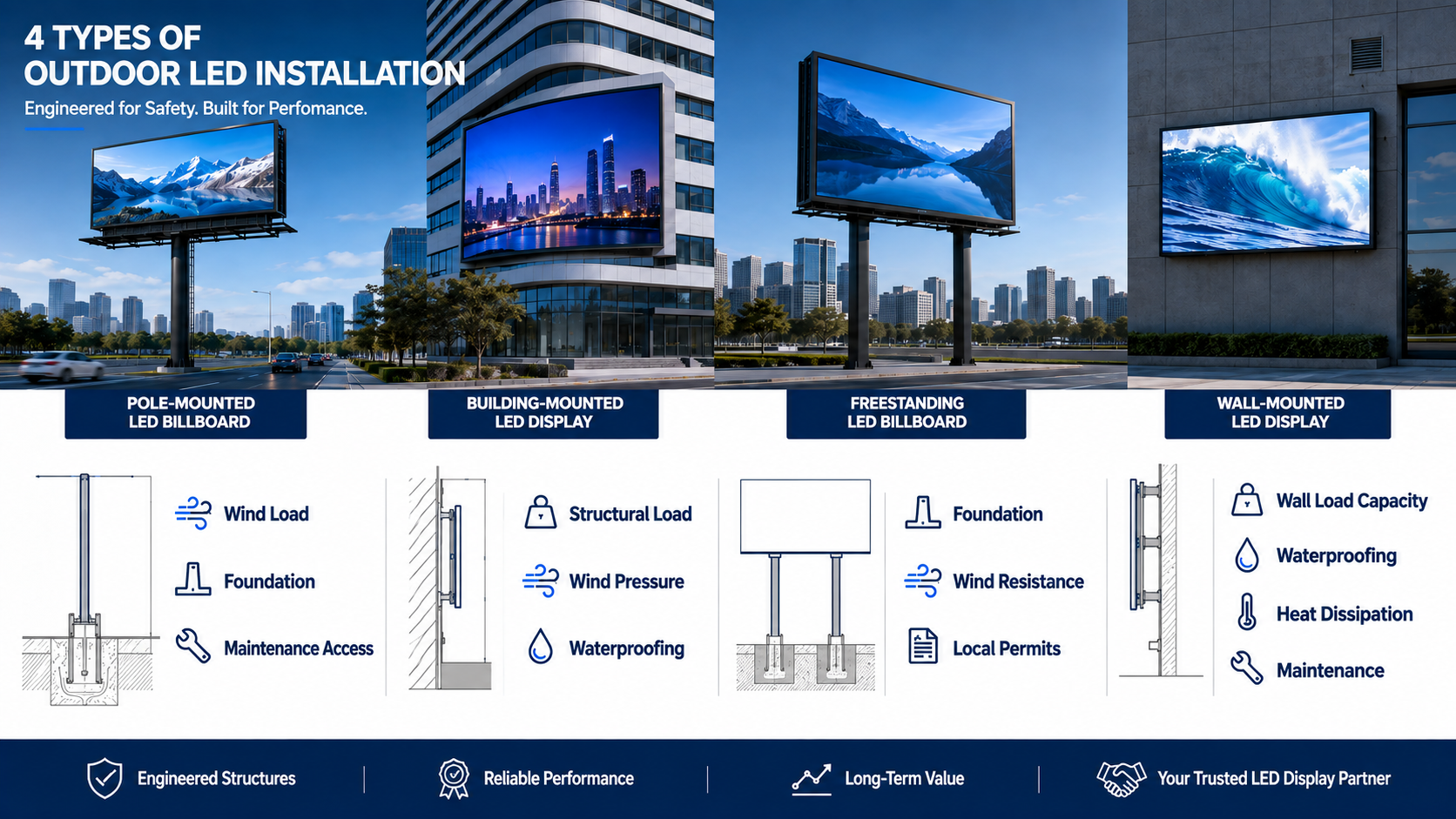
The installation type of an outdoor LED billboard affects visibility, viewing angle, structural requirements, maintenance access, wind resistance, and project cost. The right option should be selected based on the building structure, available space, viewing distance, environmental conditions, and maintenance needs.
Pole-Mounted LED Billboard
Pole-mounted billboards are elevated on one or more steel poles and are commonly used for highways, roadside advertising, and open commercial areas. Their height provides excellent visibility over vehicles and other obstacles, making them ideal for high-traffic locations.
Key considerations include structural stability, wind load, foundation strength, cabinet weight, and safe maintenance access. A qualified structural engineer should evaluate the supporting structure according to local conditions.
Building-Mounted LED Display
Building-mounted displays are attached directly to a building facade or structural framework. They are widely used on commercial buildings, shopping centers, hotels, and office buildings, especially in high-traffic urban areas.
This solution makes efficient use of existing building space, but the structure must be assessed for load capacity, wind pressure, vibration, waterproofing, and load distribution. Maintenance access is also important, particularly for high-level installations.
Freestanding LED Billboard
Freestanding billboards use an independent steel frame or support structure and can be installed in open spaces, parking lots, roadside locations, and advertising sites. They offer flexible positioning and viewing angles without relying on an existing building.
The foundation and support structure must be designed to withstand wind, rain, vibration, and other environmental loads. Local permits, planning regulations, setback requirements, and visibility restrictions should also be checked.
Wall-Mounted LED Display
Wall-mounted displays are installed on exterior walls or supporting frames and are suitable for retail stores, malls, restaurants, entertainment venues, and commercial facades. They require less ground space and can integrate well with existing architecture.
Before installation, check the wall's load-bearing capacity and mounting surface. Waterproofing, heat dissipation, cable routing, wind resistance, and front or rear maintenance access should also be planned in advance.
Key Factors to Consider When Choosing an Outdoor LED Billboard
Pixel Pitch and Viewing Distance
Pixel pitch is one of the most important specifications to consider when selecting an outdoor LED billboard. It refers to the distance between the centers of two adjacent LED pixels, usually measured in millimeters. A smaller pixel pitch means a higher pixel density and better image detail, while a larger pixel pitch is generally more suitable for screens viewed from a greater distance.
For outdoor advertising applications, the right pixel pitch should always be determined based on the expected viewing distance rather than simply choosing the smallest available pitch.
Application Scenario | Recommended Pixel Pitch | Minimum Viewing Distance |
Highway Billboards | P10 - P16 | 10 - 16m |
Urban Roadside/DOOH Advertising | P6 - P10 | 6 - 10m |
Sports Stadiums | P4 - P10 | 4 - 10m |
Outdoor Events | P2.9 - P4.8 | 3 - 5m |
Brightness and Daylight Visibility
Outdoor LED billboards need sufficient brightness to remain visible in direct sunlight while avoiding unnecessary glare and energy consumption. The ideal brightness depends on the installation environment, screen orientation, and exposure to sunlight.
Recommended Brightness by Installation Scenario
Installation Scenario | Suggested Brightness | Suggested Brightness |
Open-air highway or roadside | 6,000–10,000 nits | 6,000–10,000 nits |
Urban streets and commercial areas | 5,000–8,000 nits | 5,000–8,000 nits |
Partially sheltered outdoor areas | 3,000–5,000 nits | 3,000–5,000 nits |
Covered or semi-outdoor locations | 2,500–4,000 nits | 2,500–4,000 nits |
IP Rating and Weather Resistance
Outdoor LED displays are exposed to rain, dust, humidity, wind, and temperature fluctuations. Effective protection is therefore essential for long-term reliability.
The IP (Ingress Protection) rating indicates how well a cabinet is protected against solid particles and water. The first digit represents solid-particle protection, while the second digit represents water protection.
For example:
IP65
6 = Dust-tight
5 = Protection against water jets
IP66 provides a higher level of protection against stronger water exposure.
The appropriate IP rating should be selected based on the actual installation environment. Dry indoor applications generally require a lower IP rating, while IP65 or higher is commonly recommended for outdoor LED displays, depending on the cabinet design and environment.
When evaluating an outdoor LED billboard, consider:
Feature | Benefit |
Waterproof cabinet | Helps prevent rainwater ingress |
Sealed modules | Protects internal electronics |
Anti-corrosion treatment | Improves durability in humid environments |
UV-resistant materials | Reduces degradation caused by sunlight |
Temperature management | Helps maintain stable operation |
Wind-resistant structure | Improves installation safety |
It is also important to distinguish between the LED module, cabinet, and overall installation structure. A high IP-rated cabinet does not automatically mean that the entire billboard installation is adequately protected against every environmental condition.
Maintenance and Serviceability
Even a high-quality outdoor LED billboard will eventually require maintenance. The key question is not whether maintenance will be needed, but how quickly and efficiently technicians can perform it. A modular design can make a significant difference.
Front maintenance
Advantages:
Suitable for installations with limited rear access
Modules can be removed from the front
Easier maintenance in certain wall-mounted installations
Rear maintenance
Advantages:
Convenient for cabinets with accessible rear service areas
Can provide easier access to power supplies and internal electronics
Often suitable for freestanding structures with sufficient space behind the display
The best option depends on the physical installation environment.
Power Consumption and Energy Efficiency
An outdoor LED billboard can operate for many hours every day, meaning electricity consumption can become a significant part of its total cost of ownership.
Instead of looking only at the maximum power rating, buyers should examine both maximum power consumption and average/typical power consumption.
Maximum vs. Average Power
Maximum power consumption represents a high-load operating condition, often associated with bright content.
Average power consumption is more representative of real-world operation because LED billboards typically display a mixture of colors, images, videos, and darker content.
A simplified calculation can help estimate annual electricity usage:
Annual Energy Consumption = Average Power × Operating Hours × Operating Days
For example, if a billboard averages 5 kW during operation and runs for 12 hours per day:
5 kW × 12 hours × 365 days = 21,900 kWh/year
Actual consumption will vary according to brightness settings, content, screen size, climate, and operating schedule.
Recommended Premteco LED Billboard Solutions
FA2 Series
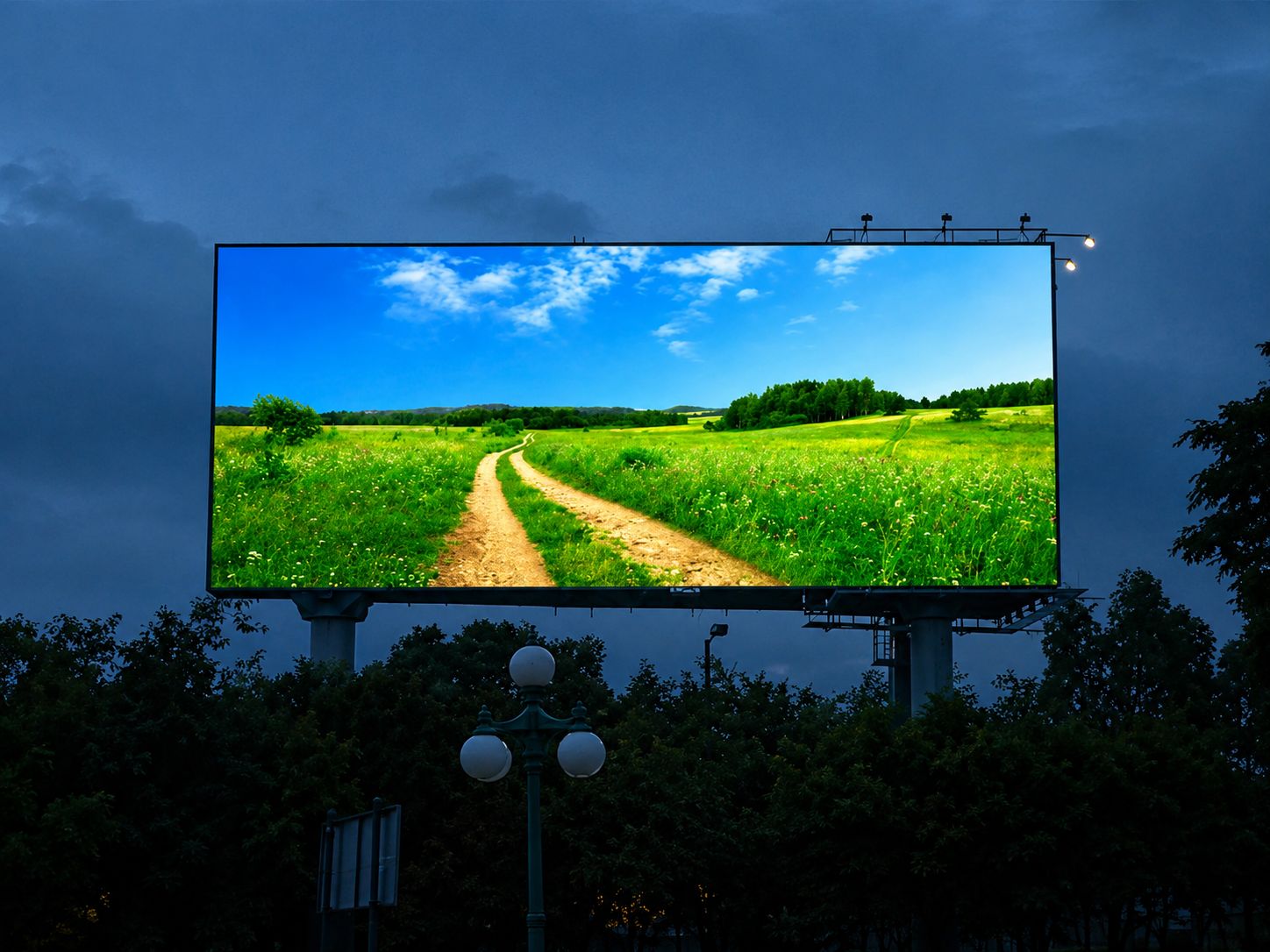
Note: Premteco FA2 Series P10 LED Display in Thailand
Key parameters:
Packaging Technology | SMD (Surface-Mounted Device) |
Pixel Pitches | P2.9, P3.91, P4.8, p6.67, P8, P10 |
Brightness | 4,300 ~ 10,000nits |
Refresh Rate | 3840Hz |
IP Grade | P66, P68 |
Operating Temperature | -30 ~ +65℃ |
Cabinet Weight | 28 ~ 36kg/panel |
Cabinet Size | 500×500 mm, 500×1000mm, 960×960mm |
Why Choose FA2?
Convenient Front Maintenance: Full front-service design allows quick access to modules, power supplies, and receiving cards for easy maintenance.
Versatile Outdoor Adaptation: High brightness and IP65-rated protection ensure clear visibility and stable performance in harsh weather conditions.
Energy-Efficient Operation: Optimized circuit architecture reduces power consumption and heat generation, prolonging overall display lifespan.
Durable & Seamless Cabinet: Precision-engineered cabinet structure supports seamless splicing, high flatness, and long-term structural reliability.
AP1 Series
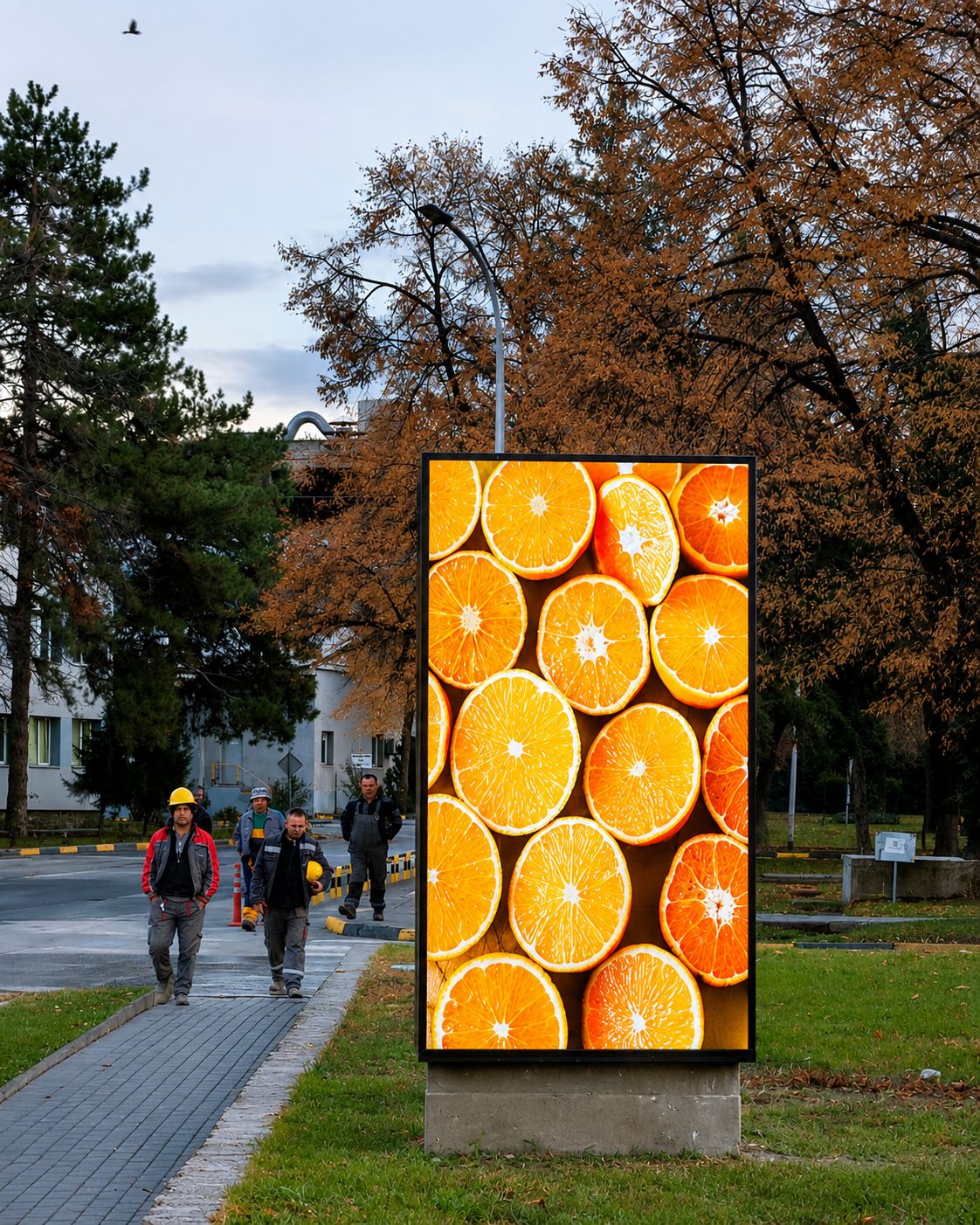
Note: Premteco AP1 series P3.911 LED Display in North Macedonia
Key parameters:
Packaging Technology | SMD (Surface-Mounted Device) |
Pixel Pitches | P1.8, P2.5, P3.07, P3.91, P4, P4.8 |
Brightness | 4,500 ~ 5,800nits |
Refresh Rate | 3840Hz |
IP Grade | P55, P65 |
Operating Temperature | -20 ~ +50℃ |
Cabinet Weight | 28 ~ 36kg/panel |
Cabinet Size | Single side: 235kg/pc; Double sides: 315kg/pc |
Why Choose AP1?
Sleek & Lightweight Banner: Slim poster-style cabinet design ideal for outdoor advertising banners, street poles, and retail fronts.
High Refresh & Vibrant Visuals: Outstanding refresh rate and dynamic color rendering deliver smooth, eye-catching dynamic content.
Smart Remote Management: Supports wireless cluster control, smart cloud publishing, and real-time remote updates for easy multi-screen operation.
Rugged All-Weather Protection: Industrial-grade IP65 enclosure ensures reliable, dustproof, and waterproof 24/7 continuous operation.
FA2 MAX
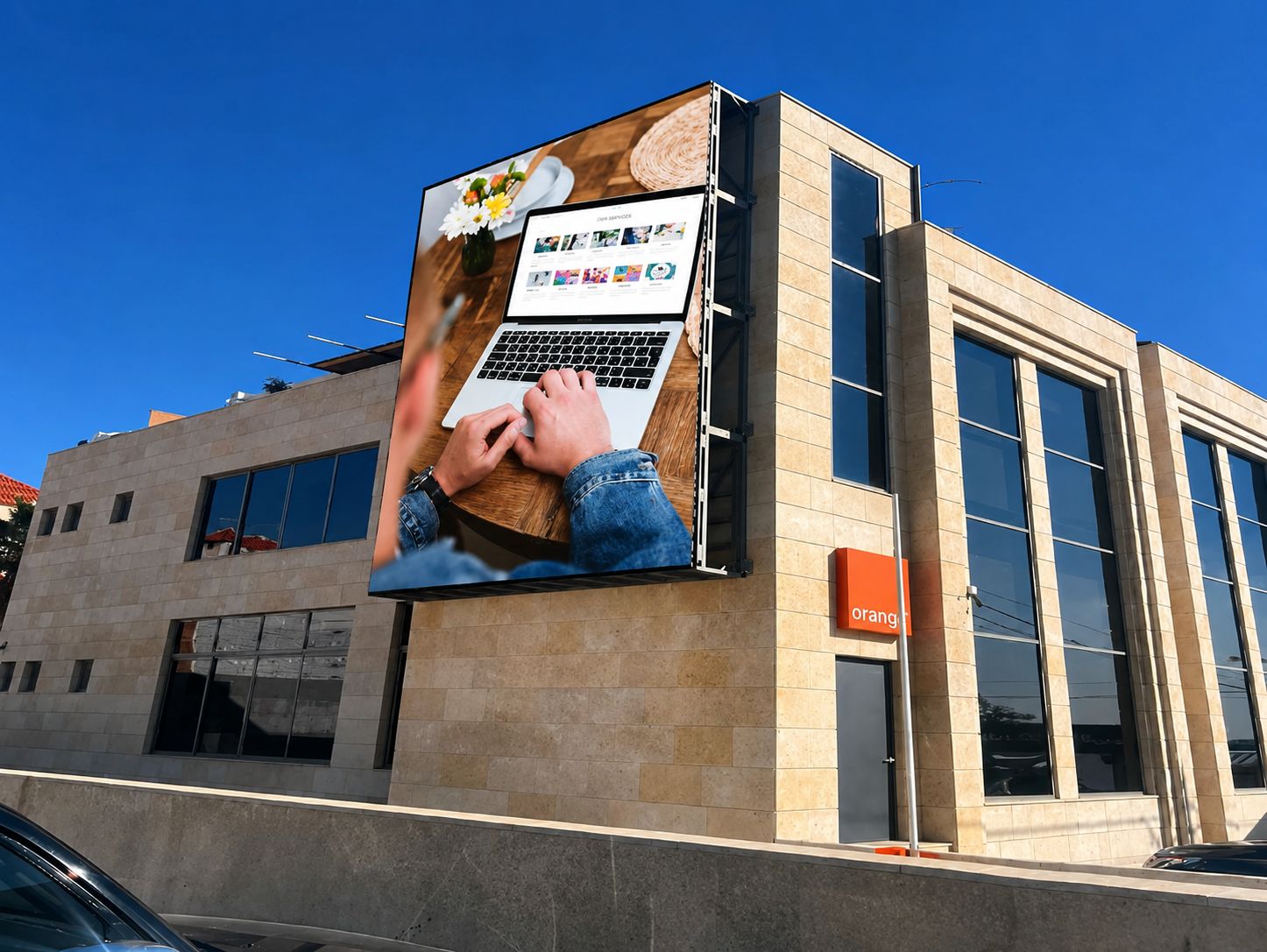
Note: Premteco FA2 MAX series P2.9 LED Display IN Jordan
Key parameters:
Packaging Technology | SMD (Surface-Mounted Device) |
Pixel Pitches | P2.9, P3.9, P4.8, p6.2, P8.3, P10.4 |
Brightness | 5,000 ~ 9,000nits |
Refresh Rate | 3840 ~ 40,000Hz |
IP Grade | P66 |
Operating Temperature | -20 ~ +50℃ |
Cabinet Weight | 28-30kg/sqm |
Cabinet Size | 1000×1000mm |
Why Choose FA2 MAX?
Ultra-High Brightness & Clarity: Superior light output ensures vivid, high-contrast visual performance even under direct sunlight.
Advanced Weather Resistance: Built with robust IP65 dual protection to withstand extreme temperatures, heavy rain, and harsh environments.
Enhanced Energy Saving: Integrated common-cathode technology reduces operating costs while maintaining maximum brightness and lower heat.
Flexible Front & Rear Access: Dual-maintenance capability simplifies installation and routine servicing across diverse outdoor application scenarios.
Frequently Asked Questions about Outdoor LED Billboard
Q1. What pixel pitch is best for an outdoor LED billboard?
A1. It depends mainly on the viewing distance. Larger pixel pitches such as P10–P16 are suitable for long-distance applications like highways, while P2.9–P6 is more appropriate for closer-viewing applications.
Q2. How bright should an outdoor LED billboard be?
A2. For most outdoor applications, brightness of around 5,000–10,000 nits is a practical range, depending on sunlight exposure and location. Displays in direct sunlight generally require higher brightness.
Q3. Is IP65 enough for an outdoor LED billboard?
A3. IP65 is a common protection level for outdoor LED displays and provides protection against dust and water jets. However, overall weather resistance also depends on cabinet sealing, drainage, corrosion protection, and thermal management.
Q4. What maintenance does an outdoor LED billboard require?
A4. Routine maintenance typically includes checking LED modules, power supplies, cables, cooling systems, and structural components. Choosing a display with front or rear maintenance access can significantly simplify repairs and reduce downtime.
Need Help in Choosing The Right Outdoor LED Billboard For Your Project?
Looking for the right outdoor LED billboard for your project? Contact Premteco's team to discuss your application, viewing distance, installation environment, and performance requirements. We'll help you identify the right LED display configuration for your project.
Control Room LED Video Walls: How to Choose the Right Display
Flip-Chip vs Wire-Bond COB LED Displays: Key Differences
Flexible LED Displays: Applications and Buying Guide
LED Display Grayscale: Bit Depth and Image Quality Explained
COB vs MIP for P0.9 LED Video Wall: Which Is Better?
Premteco: special-shaped screen to present a different
How does the LED display follow the 5G trend?
Premteco introduces new design rental screen
Premteco P8 Perimeter LED Screen for Stadium in Canada
Premteco P10 Outdoor Fixed LED Display in Australia
Premteco P1.5 Indoor Full Color LED Screen in Australia
Premteco P8 Outdoor LED Trailer Screen in Australia
Premteco P2.5 Indoor LED Banner Screen in Australia
Premteco P4.8 outdoor LED screen in Qatar
Premteco P1.9 Indoor HD LED screen in Kuwait
Premteco P3.9 Outdoor Rental LED Display in Austria