


 Warranty Policy
 FAQ
FAQ Download
 Company Events
 Business Events
 Vlog
Vlog Profile
 Why Premteco
 Certificates

 CN
CN EN
EN RU
RU ES
ES AR
AR

High-grade XR LED display-P1.9, P2.6, P2.9

Indoor Small Pitch Mini LED Display-P0.9, P1.25, P1.56

LED Floor Display-P2.5, P2.6, P2.9, P3.9, P4.8,P5.2,P6.25

Extremely Thin 4k LED Display

Fine Pitch LED Display-P2.5, P2, P1.8

Interactive LED Display-P1.2, P1.5, P1.8

Indoor Fine Pitch LED Display-P1.86, P2.0, P2.5, P3.076

Indoor Fine Pitch LED Display

Innovative COB LED Display - P0.78 P0.93 P1.25 P1.56 P1.87

Innovative 4K COB LED Display

Indoor Fine Pitch COB LED Display

Macro High Definition COB LED Display

Indoor Fine Pitch LED Display P0.7, P0.9, P1.25, and P1.56

IP68 Outdoor Front Access LED Display

Outdoor Front Service LED Display-P5, P6, P6.6, P8, P10

IP68 Outdoor Front Service LED Display-P6, P8, P10

Indoor Fully Front Service LED Display - P1.9, P2.6, P2.9, P3.9

Outdoor Front Access LED Display-P4.7, P6.3, P9.5

Outdoor LED Display Screen-P3.9, P4.8, P6.2, P7.8, P10.4

DIP LED Display-P10, P16, P20

SMD Outdoor LED Display-P1.9, P2.6, P3, P4, P6, P8, P10

Die-casting Slim Type Outdoor LED Display-P4, P5, P6.6, P8, P10, P16

IP66 Outdoor Front and Rear Access LED Display

Outdoor Front and Rear Access LED Display P5.71, P6.67, P8 and P10

Cutting-edge Outdoor LED Display Technology Solution

Outdoor Rental LED Display-P2.9, P3.9, P4.8

Outdoor Rental LED Display-P3.9, P4.8, P5.9

High-quality Outdoor Rental LED display-P2.6, P2.9, P3.9, P4.8

Outdoor Rental LED Display-P3.9, P4.8, P5.9

Outdoor Rental LED Display-P2.9, P3.9, P4.8

High Quality Outdoor Rental Transparent LED Display

High Quality Outdoor Rental Transparent LED Display

Indoor LED Display-P2.5, P3, P4, P5

Indoor LED Panel for Rental-P2.6, P2.9, P3.9, P4.8

Indoor LED Panel for Rental-P2.6, P2.9, P3.9

Indoor LED Panel for Rental-P2.6, P2.9, P3.9

Indoor LED Panel for Rental-P2.6, P2.9, P3.9, P4.8

LED Curtain Display-P10.4, P12.5, P15.6, P25, P31.2

Media Facade LED Display-P12, P15, P25, P31, P50

Translucent LED Display-P1.9, P2.8, P3.9, P7.8, P10


Outdoor LED Display Banner-P2, P3, P4, P5

Indoor LED Display Banner-P1.8,P2.5

Indoor LED Display Banner-P1.8,P2.5

Shelf LED Display for Supermarket and Retail Stores


Spherical LED Screen for Indoor and Outdoor Advertising

Nov. 21, 2020< Back to list
Classification of LED sports event screens:
The led sports event screen is generally divided into two parts: live broadcast screen and timing score. The computer network control system is used for data processing, controls the display content of the large screen, and provides real-time data for the network system and radio and television system; the timing score system is used for game evaluation The system is the infrastructure for obtaining basic scoring data for various sports competitions.
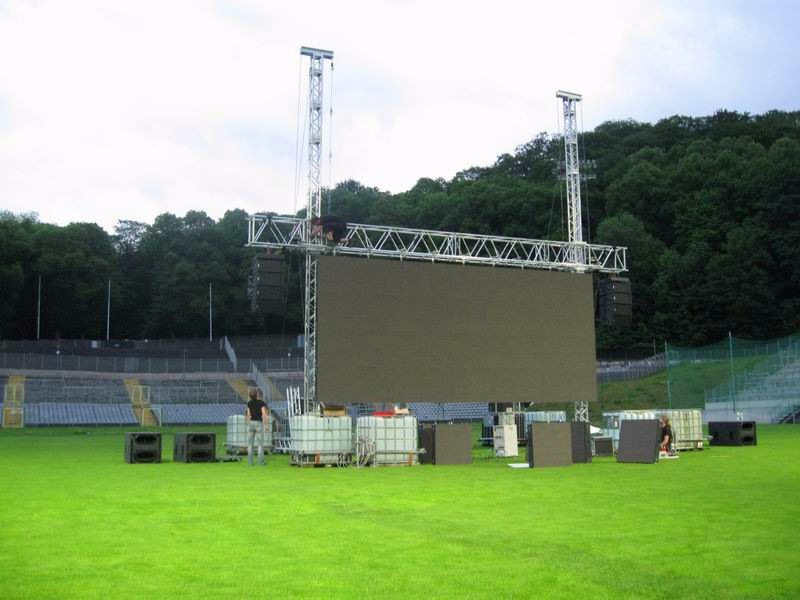
1. Full-color LED large screen.
It is used to play the highlights on the stadium (including other stadiums), or replay the wonderful close-up shots in slow motion, or use three-dimensional animation to show the game and a certain event.
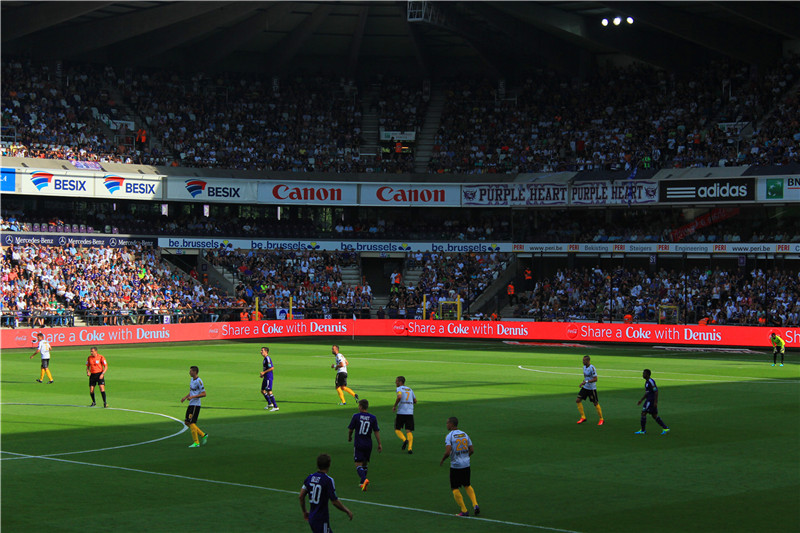
2. LED fence screen.
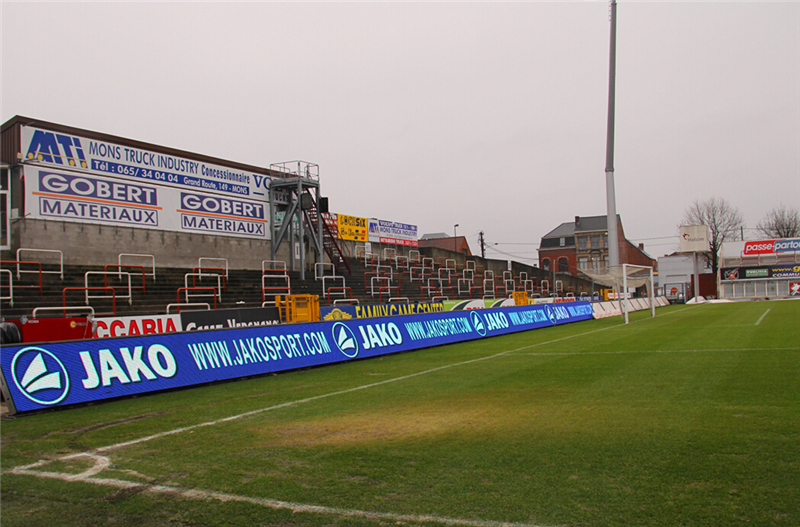
The LED display next to the stadium is not only used to play commercial advertisements, but also to replay the wonderful scenes on the court so that every wonderful moment can be memorized. The led fence screen is made up of many individual boxes connected. The weight of each box is controlled. The boxes are connected by snap-fit connectors. This design realizes that the manual can be quickly and easily disassembled and assembled, and is easy to maintain. There are separate supporting feet behind each box, through which the angle of the screen and the ground can be adjusted to ensure the viewing angle of the audience.
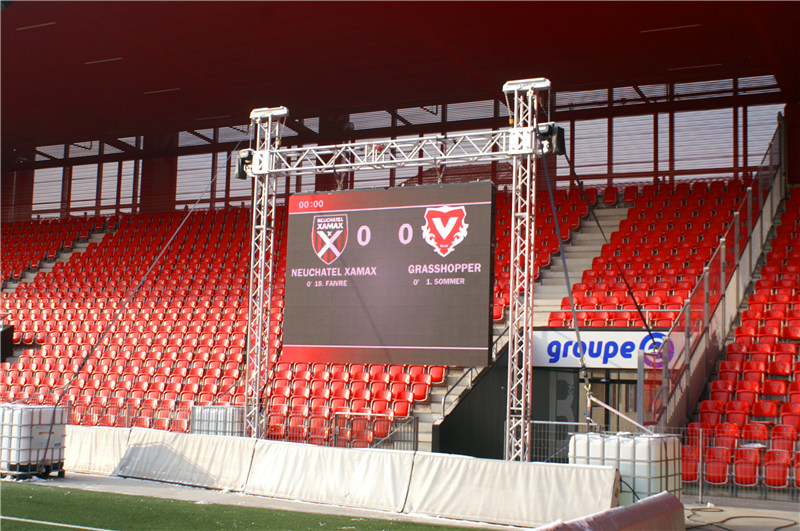
3. Timing and scoring LED screen.
It is connected with the timing and scoring system of the game to play players' game results and related information. In the sense of the game, the timing and scoring screen is more important. Some stadiums may not have a large video screen, but it cannot be useless. Screen for scoring time. The key to the timing and scoring screen in real-time accuracy and clarity, and on this basis, try to be more vivid and expressive (such as animation, etc.). The scoring screen mainly displays the contest results, data, or other information of the contestants in the form of text or text plus graphics animation. The color can be a single color, multicolor, or full color.
Note for LED sports event screen design:
1. Safety and reliability.
The crowd density of stadiums is high, and the safety performance of the stadium equipment should be put first. Under normal circumstances, the safety performance of the stadium led display should meet the requirements of 5.4 in the SJ/T11141-2003 standard, and the reliability should meet the requirements of the standard 5.10. In terms of material selection, it is required to select polymer materials with good flame-retardant properties (including LED module housing, LED module filler, PCB board, power cord sheath, etc.). At the same time, in the power supply design, the stadium LED display must be separate The power supply shall meet the requirements of 5.8 in the SJ/T11141-2003 standard; the construction acceptance of the cable line shall meet the requirements of GB50168 and GB50171; the project quality shall meet the requirements of GB50303.
In addition, the LED display for sports events should have smoke detection, lightning protection, automatic fire alarm, and automatic screen shutdown functions, and the power distribution cabinet should have overload protection, leakage protection, and step-by-step power-on functions.
2. Requirements for installation location and quantity.
The installation position of the LED display for sports events needs to ensure that more than 95% of the spectators in the fixed seats in the venue can watch effectively, and the viewing distance and vision are wide. At the same time, it is required that the content displayed on the LED display screen can be easily and clearly seen by the athletes, coaches, and referees (except the referees who score on the spot in the diving competition).
3. Maximum viewing distance and character height requirements.
Outdoor sports events led display brightness requirements are above 8000cd/square meter; dual-color display displays above 4000cd/square meter; monochrome display above 2000cd/square meter. Indoor stadiums full-color LED display brightness requirements are above 1000cd/square meter; dual-color LED display must be above 300cd/square meter; monochrome LED display must be above 120cd/square meter. At the same time, in terms of character height requirements, each character of the LED display screen of the swimming pool and dining hall with independent architectural structure is at least 0.2m higher than each character, and the LED display screen of the swimming and diving hall with integrated building structure is at least 0.28m higher than each character.
4. Optical performance requirements.
Sports events led display screens to require wide viewing angles, large visual distance, and uniform brightness, and adjustable brightness. When the background illumination is less than 20lx, the contrast of the led display should reach 100e1. The white field chromaticity coordinates can be adjusted within the color temperature of 5000K-9500K according to the use environment. According to the CIE1931 chromaticity system, the tolerance is △x∣≦0.030, ∣△y∣≦0.030.
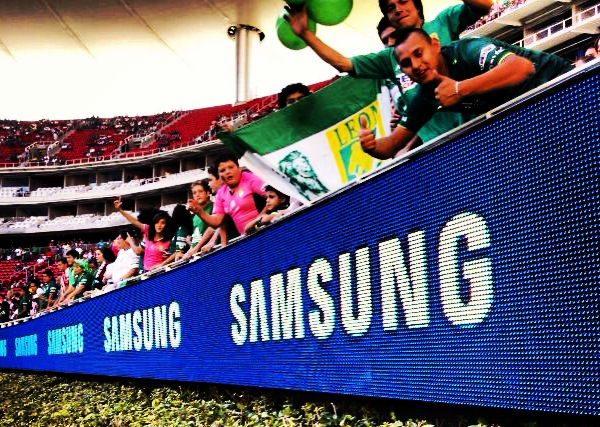
5. The display content can be controlled in real time.
It is required to have a real-time display of the rolling timing of the game; the rolling game results can be displayed; the page can be turned to display the game results; the displayed text content can be automatically and manually switched. For a full-color LED display with graphic and video display functions, text and pictures, animations, and live broadcast images should be able to switch automatically and manually.
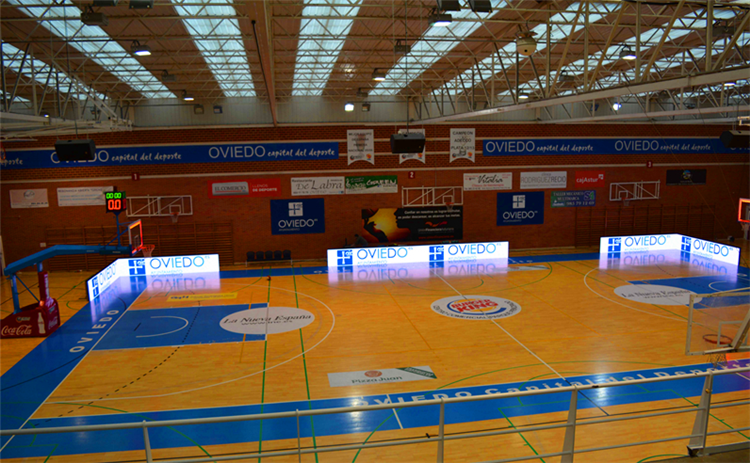
It is also worth noting that the display system of the gymnasium should be able to clearly, timely, and accurately display the information of the sports competition, and display the live situation of the competition through multimedia technology, highlighting and creating a tense and warm competition atmosphere. At the same time, the system is required to have a simple, accurate, fast, and easy-to-operate man-machine interface, support a variety of sports competition projects, meet the requirements of various sports competition rules, and facilitate maintenance and upgrades.
How to Choose an Outdoor LED Billboard: Pixel Pitch, Brightness, IP Rating and Power Consumption
COB vs MIP for P0.9 LED Video Wall: Which Is Better?
Premteco: special-shaped screen to present a different
How does the LED display follow the 5G trend?
Premteco introduces new design rental screen
Some common senses about LED display aging test
Application of AOB technology in LED display
Premteco P8 Perimeter LED Screen for Stadium in Canada
Premteco P10 Outdoor Fixed LED Display in Australia
Premteco P1.5 Indoor Full Color LED Screen in Australia
Premteco P8 Outdoor LED Trailer Screen in Australia
Premteco P2.5 Indoor LED Banner Screen in Australia
Premteco P4.8 outdoor LED screen in Qatar
Premteco P1.9 Indoor HD LED screen in Kuwait
Premteco P3.9 Outdoor Rental LED Display in Austria